




Product Description
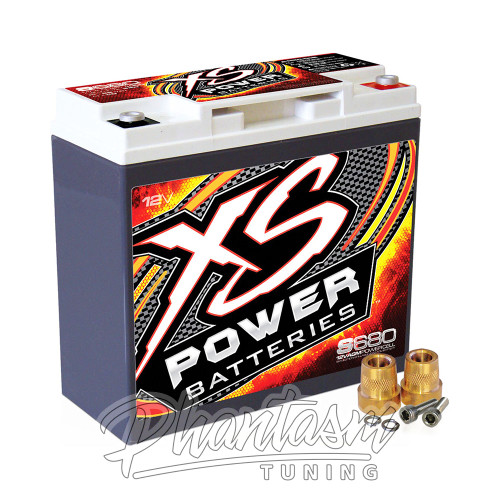
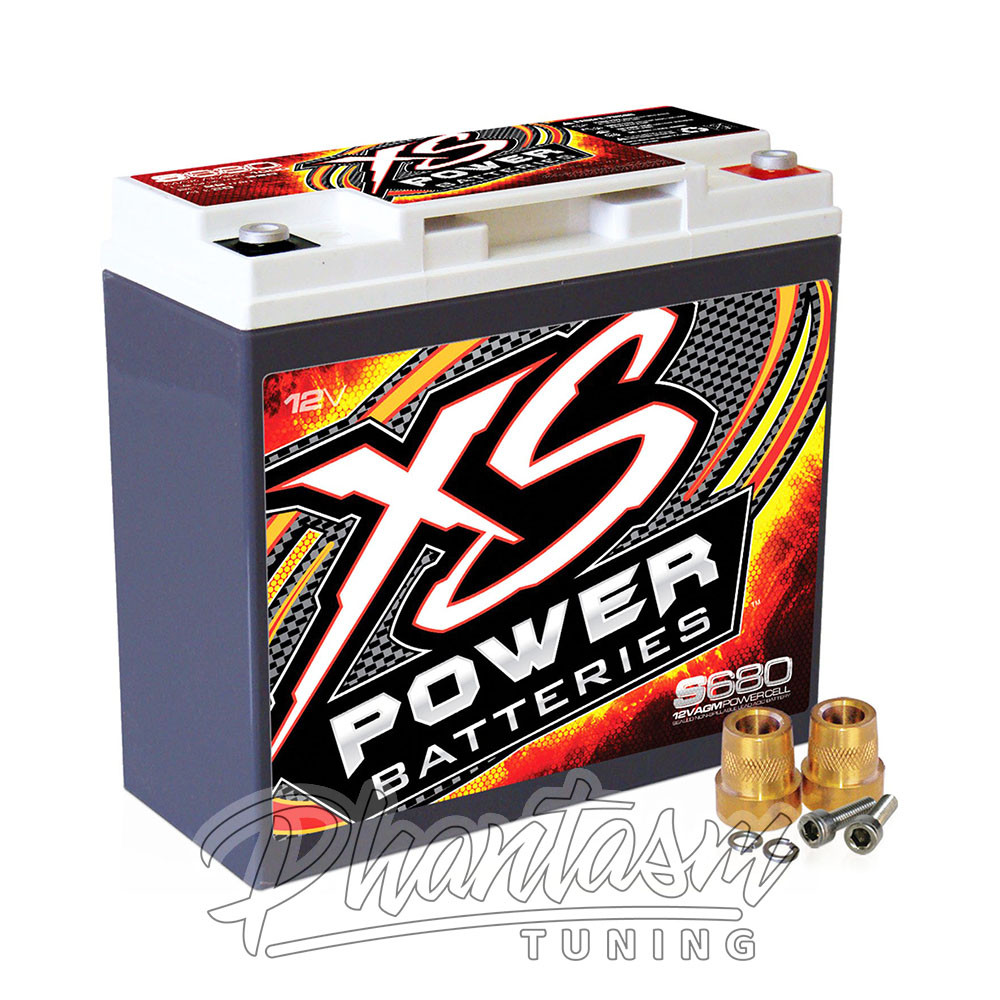
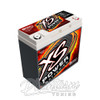
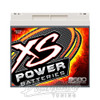
These new XS Power Cell batteries feature a non-spillable AGM battery design. The Absorbed Glass Mat is new technology where the electrolyte is suspended in an absorbent fiberglass material, eliminating the need to flood the battery with water. This allows the XS Power Cell batteries to be spill-proof and vibration-resistant, while having ultra-low internal resistance. They feature a rugged case molded of ABS plastic, making then them the leaders in performance applications for any type of racing, car audio competition, motorcycle, or marine. Able to be mounted in nearly any position, these XS Power Cell batteries will fit in places where space is a premium. Matching aluminum mounting brackets available.
Product Features:
* Max Amps available for a perfect start on race day.
* Reinforced plastic case and vibration resistant internals.
* Ultrafast recharge times between races.
---
* Weight: 15.42 LBS
* Reserve Capacity: 28 Minutes
* Height: 6.57 Inch
* Overall Length: 7.13 Inch
* Width: 3.03 Inch
* Battery Terminals: Top
* Battery Type: AGM
* Battery Usage: Deep Cycle/Starting
* Volts: 12 Volts
* Cranking Amps at 32 Degrees F: 320 Amps
---
FITS: UNIVERSAL APPLICATIONS
---
FREQUENTLY ASKED QUESTIONS:
What is an AGM battery?
Absorbed Glass Mat (AGM) Batteries completely eliminate the hassles of conventional battery maintenance. There is no liquid acid in AGM batteries. All of the acid is absorbed into the compressed glass matting in the cells. They are completely Non-Spillable, so they can be shipped by mail or courier service with no hazardous warnings or extract fees. Likewise, they can be mounted in any position for special application.
How do I charge an AGM Battery?
AGM batteries should only be charged with AGM compatible chargers. Please view our full XS Power 1004 16V and 1005 12V/14V/16V charger manuals for complete instructions.
Could you explain "Mam Amps"?
CA and CCA have been used since 1914 as a definition for battery performance. CA is defined as a measurement of the number of amps a 12 Volt battery can deliver for 30 seconds at 32°F and not drop below 7.2 volts. CCA is the same test at 0°F. These tests were meaningful for the cars of yesteryear that had to be cranked for a long time to get started. Back then CA and CCA numbers were very meaningful; however, for mobile audio use, immediate burst output is more important. XS Power batteries, when compared to the batteries of yesteryear, deliver much more power more quickly. This instant burst energy is what we call "Max Amps".
Could you explain "Amp Hours"?
People often wonder what the term "Amp Hours" means when referring to batteries. Many people assume that "AH" (amp hours abbreviated) is a standardized rating for a battery’s ability to discharge current; a true statement. The actual method for de terming the AH rating is more often times not fully understood by the automotive enthusiast.
AH capacity is measured in hours. AH is most commonly used to rate deep-cycle type batteries, or any type of battery used for relatively low discharge rates across an extended period of time. Most batteries, including XS Power batteries, are tested in a 20 hour cycle. AH tests can be performed for 10 hour cycles at a higher amp load, but results are not as useful for determining long term capacity.
An AH test can easily be conducted by the end user, which is why we at XS Power are so adamant about strict honesty regarding all of our battery ratings. To conduct your own AH test, simply calculate 5% of the AH capacity, and use that number as the amp load. Make sure the battery maintains the standardized 25°C temperature for the duration of the test. The idea is that the battery needs to maintain that load for 20 hours without falling below 10.5 volts. Please note that 16 Volt batteries would be tested to 14 Volts.
Here is an example for a 30 AH 12 Volt battery:
5% of 30 (amp hours) = 1.5 amps.
A 30 amp hour battery should be able to maintain a 1.5 amp draw for 20 hours at 25°C without falling below 10.5 volts.
When a manufacturer is initially determining AH, the calculation is done in reverse. The amp draw is multiplied by the test cycle length in hours as evidenced by the example below.
1.5 amps x 20 hours test = 30 AH
The AH rating is most useful for determining how well a deep cycle battery can maintain a relatively low amp load across an extended period of several hours, as the example above illustrates. This information is especially important to customers who plan to use XS Power batteries in Recreational Vehicles (RVs), boats, show vehicles, or any other application vehicle that will need to sustain a low draw for extended periods without being charged.
Could you explain reserve capacity minutes?
Reserve Capacity is yet another standardized battery rating useful in selecting the proper battery. Usually abbreviated "RC," reserve capacity is measured in minutes. Battery Council International defines RC as: "the number of minutes a new, fully-charged battery at 80°F (27°C) can be discharged at 25 amps and maintain a voltage equal to or higher than 1.75 volts per cell." This works out to 10.5 volts for a 12 Volt battery.
For example, the XS Power S925 battery has a rated RC of 55 minutes. This means that with the S925 starting at a full charge at 27°C, it can maintain a 25 amp load (similar to a large cooling fan) for 55 minutes before battery voltage drops to 10.5 volts.
It is easy to see how this rating is very important in determining how well a battery will operate accessories in the event of a charging system failure, if the vehicle is not properly equipped with an alternator or if the vehicle’s engine is not running.
---